
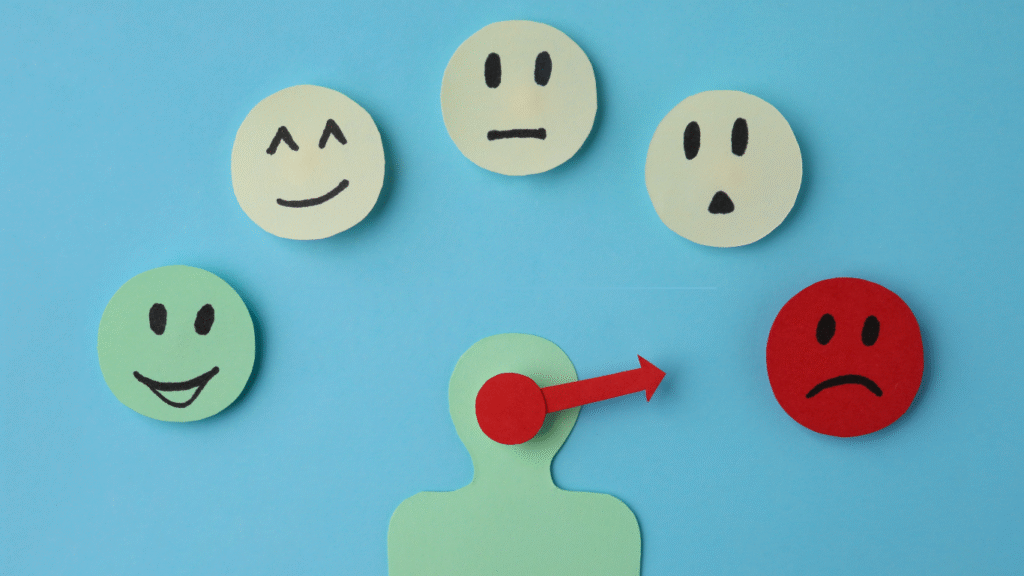
Emotions, which originate as sensations in the body, are intense feelings (exhilaration, terror, despair) that last only seconds to minutes. They are controlled by chemicals our brains release in response to a trigger or event—basically, our body’s response to whatever is happening around us. The chemicals go throughout our body, forming a feedback loop between our body and brain, creating emotion.
Emotions are always based on an external stimulus and almost always come and subside quickly. In addition to being specific and reacting to something, emotions have corresponding and universal facial expressions and body language.
Feelings
While emotions start as sensations in the body, feelings are generated from our thoughts about those emotions. In other words, feelings are how we interpret emotions and let them sink in.
We use the word “feel” for both physical and emotional states. For instance, we can “feel cold” both physically and emotionally. Feelings can be diluted or distorted by the stories we’ve unconsciously created based on past events or experiences.
Moods
A mood is a state of mind or a general feeling that can influence your thoughts, behaviours, and actions. Moods tend to be less intense than emotions and do not necessarily depend on an event or trigger. Rather than being how you feel in each moment, your mood is how you feel over time.
Moods are influenced by the environment, diet, exercise, physical health, and what you choose to think about. They can last minutes, hours, or days and have no unique corresponding nonverbal facial expressions or body language.
Connection b/w Emotions, Feelings, & Moods
Emotions, feelings, and moods impact our behaviours, perception of the world, and interactions with others. They influence each other in complex ways.
For instance, emotions trigger feelings, as they serve as the initial reaction to specific stimuli. If you receive good news, the initial happiness (emotion) eventually leads to a sense of joy and contentment (feeling).
These personal experiences influence your feelings and shape your future emotions. Someone who develops a positive outlook may face challenges with confidence and optimism.
Moods, longer-lasting emotional states, can influence how intensely someone experiences emotions. For instance, someone in a consistently positive mood may interpret challenging situations more optimistically.
As we age, we learn to better understand ourselves through our ability to recognise and process certain emotions. Simple activities like feeling check-ins can help us become more in tune with our well-being.